How to organize
chaotic stock
The Challenge: Shifting to Dynamic Logistics
Historically, the deepico ERP only supported fixed stock locations. For their new facility, the customer needed dynamic storage—the ability to place incoming goods wherever space was available while the system precisely tracked exact locations.
The timeline was aggressive. Within six weeks, we had to gather requirements, design the digital and physical workflows, establish a spatial naming convention, produce physical labels, build tablet interfaces, test the system, and train the warehouse staff.
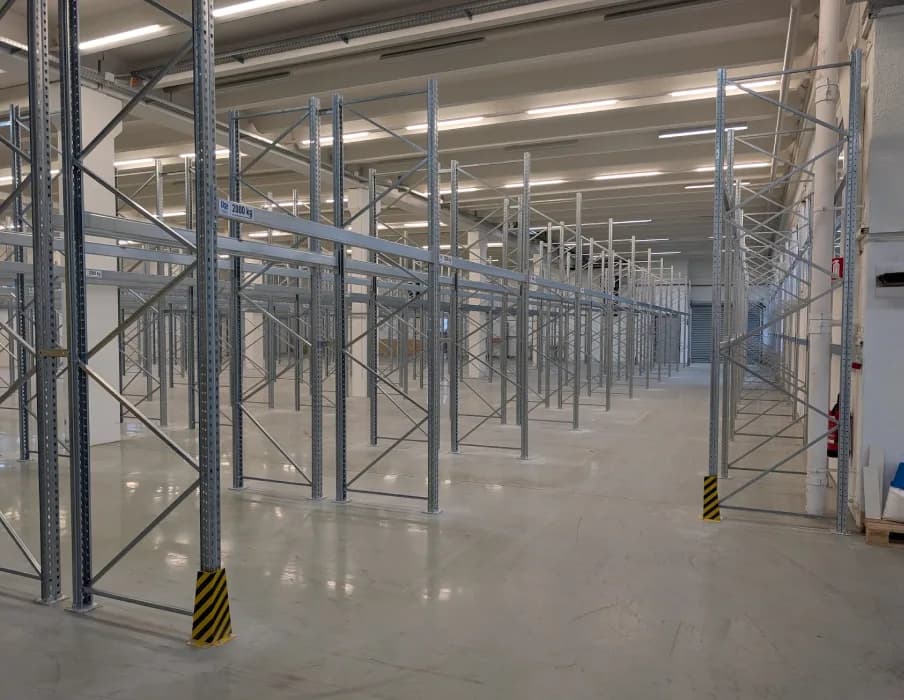
How to go from this …
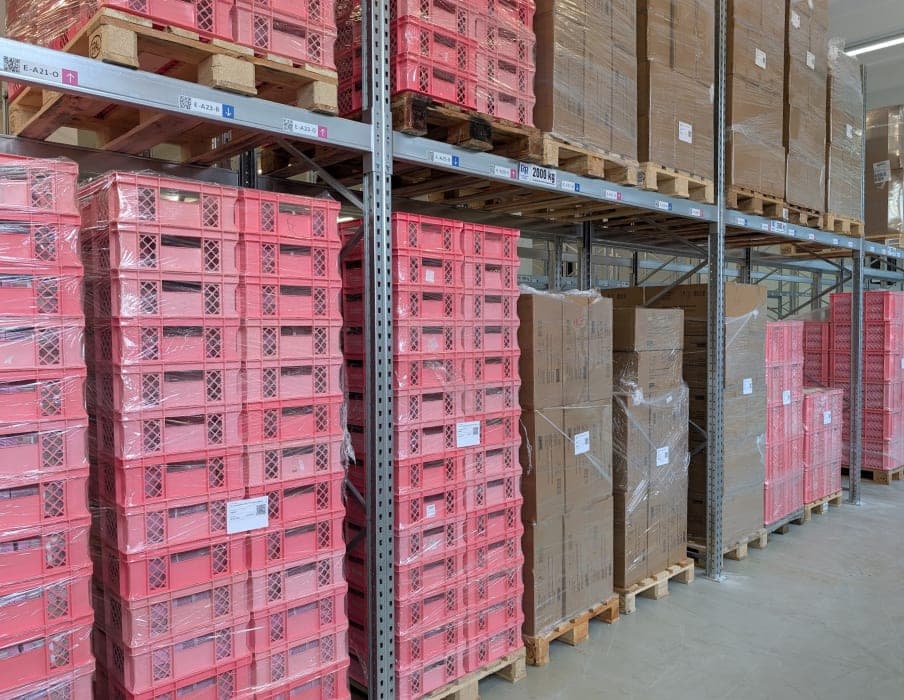
… to this
Workflow & Interface Design
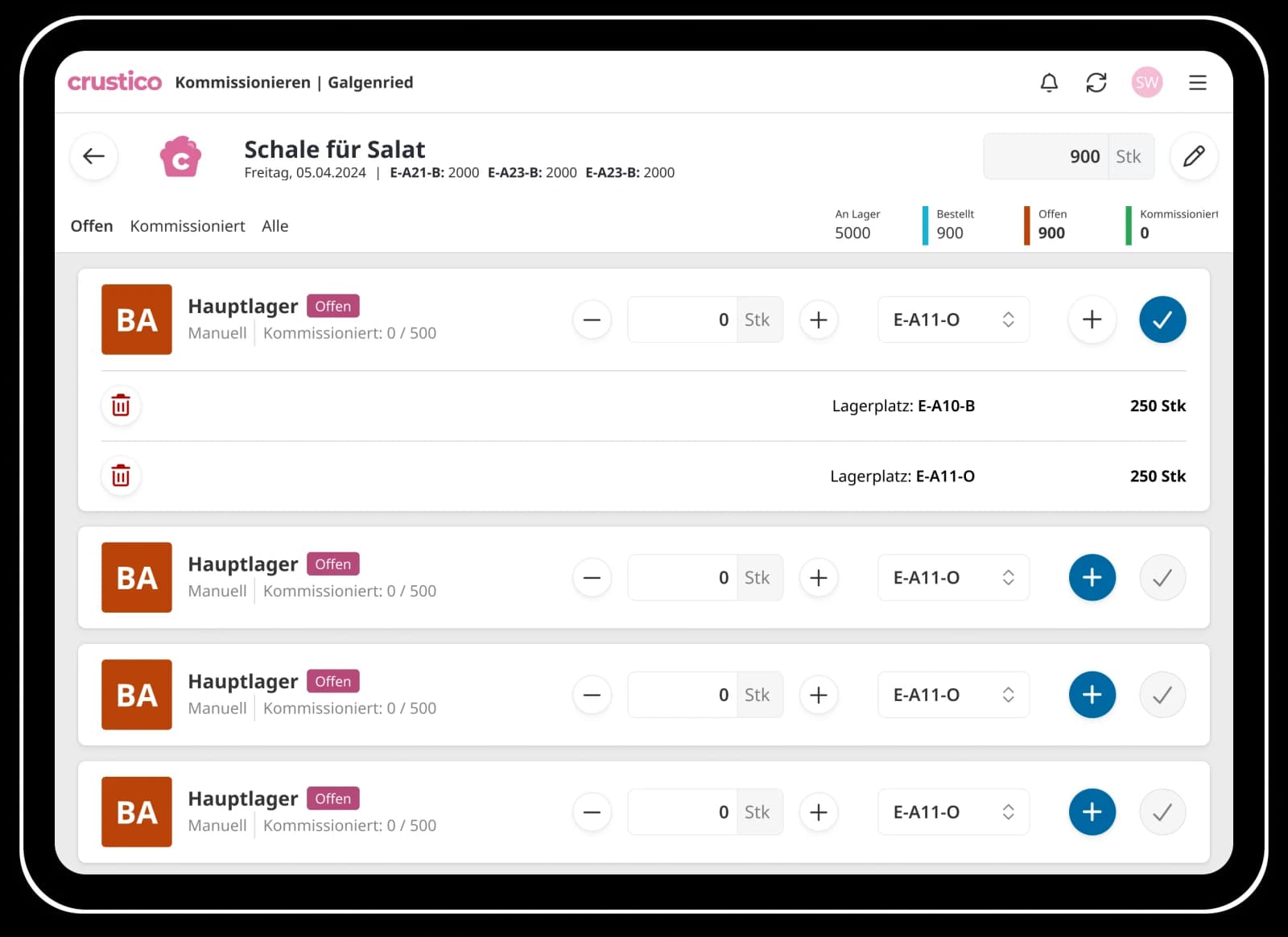
I started by mapping the end-to-end flow of goods. Workers on the floor needed to rapidly label incoming pallets, book them into the ERP via tablets, and scan them into an available rack once the delivery truck departed.
While the engineering lead focused on integrating barcode scanner hardware into the deepico architecture, I designed the tablet UI flows to ensure the scanning and booking process was frictionless for workers wearing gloves in a fast-paced environment.

On-site proof of concept in the empty warehouse, planning optimal label naming and placement and testing scanning ergonomics

Early sketches defining the rack naming conventions and QR code dimensions
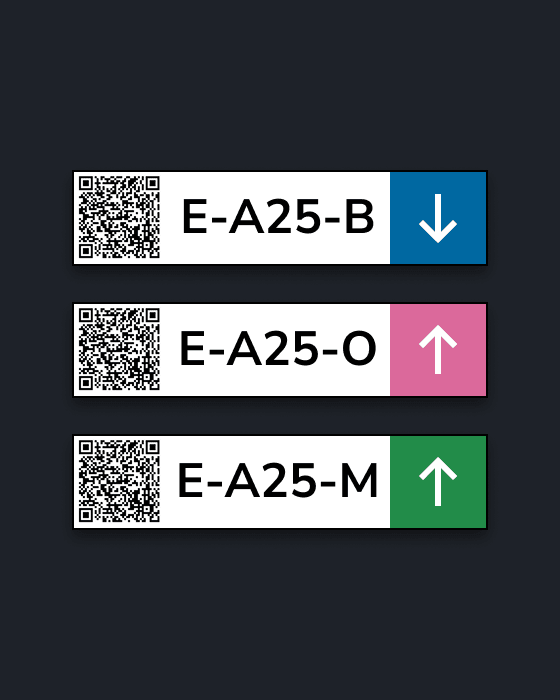
The final generated labels utilizing color and directional cues for quick visual parsing by forklift drivers and floor workers
To translate this system to the physical space, I designed scannable labels featuring clear typography, QR codes, and color-coded directional arrows to indicate vertical rack positions (top, middle, bottom). Using Affinity’s data-merge capabilities, I automated the layout and batch-produced the print files for all 800+ location labels.


Physical UX & The Labeling System
A dynamic stock system is only as good as its physical spatial mapping. I developed the naming convention for the warehouse structure, defining how aisles, racks, and specific bins were identified.
Execution & Outcome
By aligning the digital tablet workflows with clear physical wayfinding, we successfully launched the dynamic stock system on schedule. Floor workers adapted quickly to the new flow, allowing the customer to maximize their warehouse capacity without being constrained by fixed storage limits.
Role
Role: Lead Product Designer
Context
Context: A deepico customer required a "chaotic" (dynamic) stock handling system for a new warehouse. Timeline: Six weeks from initial requirements to staff training and rollout.